Urban Forest Ecology: Voracious, Parthenogenic Asian Jumping Worms
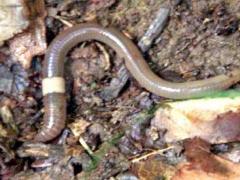
Council Member John T. wrote to me after last summer’s ReLeaf Conference. He was surprised that in the conversations he had with other ReLeaf folks, there was little to no awareness of the Asian jumping worm (Amynthas agrestis) and how damaging it is to forests, including, one could assume, the urban forest.
Last summer, for the first time, I noticed that my compost-enriched vegetable garden soil seemed excessively granulated, and the soil was subsiding and drying out faster than usual. Turns out, the granulation was the worm castings of the voracious eater, Amynthas agrestis. I’ve since seen the big worms, and now I shudder when they appear. Read on to see why it’s now my mission to rid my garden of these worms, and why the Asian jumping worm is a concern for foresters throughout much of the country.