First Detector Webinar: EAB Update
- Webinar
Emerald Ash Borer has been confirmed in Vermont, now what?
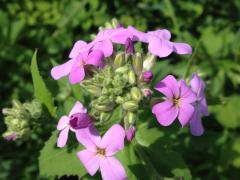
As winter ends, and spring begins, and we look forward to May, we can start to learn invasive plants that are common early bloomers.
ourVTwoods.org is a new comprehensive digital resource about Vermont’s forests. The website serves as a portal for partner coordination and a hub for information on forest health, stewardship, and the Vermont forest economy. We invite you to be part of the online ourVTwoods.org community and share the news that ourVTwoods.org is live.
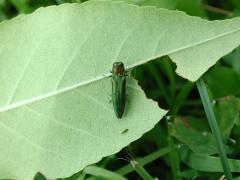
The Vermont Department of Forests, Parks & Recreation and the Vermont Agency of Agriculture, Foods & Markets report that emerald ash borer (EAB), a destructive forest insect from Asia, has been detected in Vermont. Officials with the USDA Animal & Plant Health and Inspection Service have confirmed the identification of a beetle recently found in northern Orange County, Vermont. The insect was reported through the vtinvasives.org website.
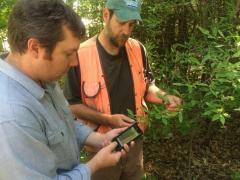
This is part three (final) in a three-part series on how to create an invasive plant management plan. This section will guide you through assessing and mapping options for everyday landowners.
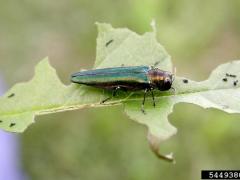
In Pennsylvania, where emerald ash borer has been present since 2007, municipalities have found successful ash-management plans under guidance of the state's Department of Conservation and Natural Resources, and they offer a model for other regions to follow. A new guide outlines a set of four options for communities to choose from as they plan for the impact of the emerald ash borer.
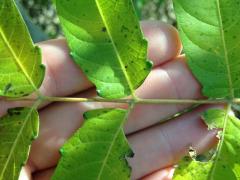
"Ohio is taking a swing at nature’s bullies.
Under new rules that went into effect Sunday, the sale and distribution of 38 destructive, invasive plant species will become illegal.
In its list, the state agriculture department included various types of honeysuckles, Bradford pear trees, autumn olive shrubs and fig buttercup flowers that line freeways, coat forest floors and choke wild spaces across Ohio.........................."
Author Credit: By Marion Renault, The Columbus Dispatch
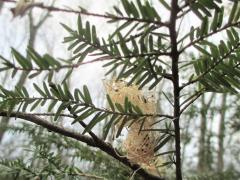
The winter of 2016- 2017 was a good one for hemlock woolly adelgids (HWA) in Vermont, which is probably bad news for hemlock trees. The adelgid is an invasive forest insect that attacks hemlock trees and was first discovered in Vermont in 2007. Last winter’s HWA mortality rate was only 65%, compared to 99 – 97% for the previous three years. Forest health staff with the Department of Forests, Parks and Recreation are seeking volunteers to help survey for HWA.
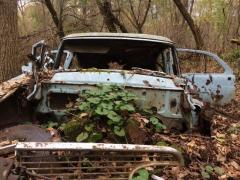
The growing season for 2017 saw many projects across the state tackling the forest, field, and wetland health issue of non-native invasive plants. Below are highlights of some of these amazing local efforts. Huge thanks to everyone who is working toward making our Vermont landscapes healthier and more resilient, and protecting them for generations to come.