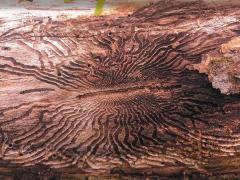
Webinar: Emerald Ash Borer Update
- Webinar
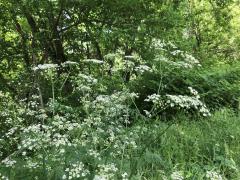
Many invasive plants in Vermont start blooming in May. Keep an eye out for one obvious bloomer this time of year, Wild Chervil (Anthriscus sylvestris), or also commonly called “cow parsley”. This invasive plant can be seen alongside roads, and is notable in our rolling Vermont fields. This is a biennial herbaceous plant within the carrot family, Apiaceae. In Vermont, there are two introduced Anthriscus species documented outside of cultivation, and include Wild Chervil and its close relative, Garden Chervil (Anthriscus cerefolium). The name, Chervil, comes perhaps from Latin and Greek roots, collectively meaning “leaf to enjoy”.
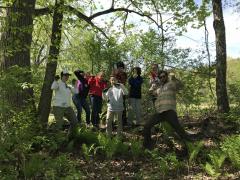
The floodplain forest in Richmond rang out with the excitement and hard work of 50 5th graders. In teams, the students worked to remove a non-native invasive plant—honeysuckle. Their ranks were led by community volunteer, Jon Kart, and the team members of VT Forests, Parks & Recreation’s Invasive Plants Program (VTIPP).
The invasive tree-killer that’s alarming Vermont forestry officials could cost the town of Hartford alone hundreds of thousands of dollars, according to early projections by Tree Warden Brad Goedkoop.
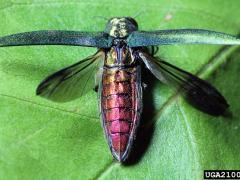
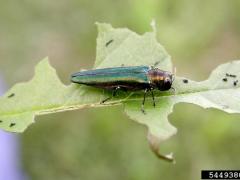
There are at least 50 species of non-native insects established in the state, including the Emerald Ash Borer, which has devastated the local ash tree population. Poised to join this list is another wood-boring bug, which could have a similar impact on more of New Hampshire’s trees: the Southern Pine Beetle.