NEW invasive plant confirmed in Burlington
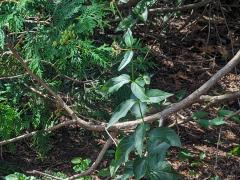
Pale swallowwort was confirmed in the state for the first time.
Pale swallowwort was confirmed in the state for the first time.

Administrative Order Clarifies the Movement of Ash Logs and Firewood to Minimize the Spread of EAB

You may have heard folks around Vermont using the term "introduced" species interchangeably with the conventional terminology of "invasive" species. This may be due to a conversation happening at many levels about the language and framing of ideas used in the field of invasion ecology. Because language has the power to shape public attitudes and behaviors, the Plant Health Team at Vermont's Agency of Agriculture is adopting more accurate, neutral, and respectful language to better reflect the complexities of species introductions and avoid reinforcing harmful stereotypes.
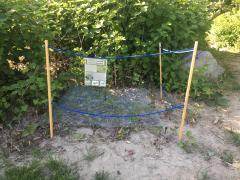
In our last issue of the VTInvasives e-newsletter, we discussed a new method of treating knotweed by using wire fencing laid horizontally on the ground over a patch of the offending species. Over the past two months, I have received several emails from readers asking some clarifying questions and looking for updates. I apologize for not being able to reply to everyone, and I hope that this article can provide an update with some answers.
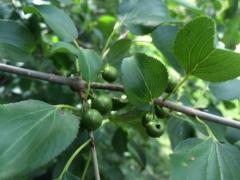
The colder temps and flurries of snow may make plant identification a thing of dreams for the coming summer. But one common invasive plant in Vermont can still be easily spotted throughout the winter months: common buckthorn.
It is hard to believe that the Forest Hero! Network is fast approaching its 1st birthday! To celebrate, we'd like to share with everyone, the good work that volunteers are completing in their communities. If you are working on a project and would like to help inspire others who may be seeking ideas, please write in and we'll share in future newsletters!
To learn more about the Network, and if you’d like to learn about other training opportunities, stay tuned to this website: https://vtinvasives.org/forest-hero-network
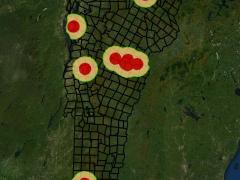
There has been a new detection of Emerald Ash Borer (EAB) in Derby Line, Vermont. This is the first confirmed detection in Orleans County.
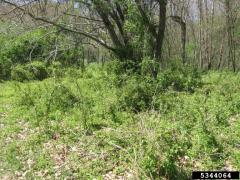
When recalling a drive down a dusty country road, you might remember seeing round green shrubs speckled with small white flowers, in otherwise empty grazing paddocks, or along farm fields. This plant is called multiflora rose (Rosa multiflora) and is a perennial shrub within the Rose family, Rosaceae. The name, multiflora, means “many flowered”, and its nickname, “rambler rose” perhaps comes from its tendency to spread from cane or seed.