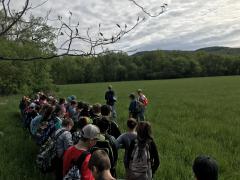
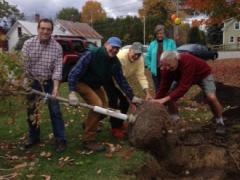
Weed Warrior event in South Burlington this Summer
- Volunteer Opportunity
- Volunteer Training
- Workshop
July 24, 2019
9 am — 11 am
Wheeler Nature Park, South Burlington
The 2018 Vermont Habitat Stamp Annual Report, released earlier this winter, highlights the conservation power of the multiplier effect – where one action can be a catalyst for other actions and the effects keep radiating out. This past year, over $110,000 were raised from donations and were then used to leverage an additional $143,000 in federal funds. This created a total reserve of over $253,000 to be used for habitat conservation by the Vermont Department of Fish and Wildlife.
The growing season for 2018 saw many projects across the state tackling the forest, field, and wetland health issue of non-native invasive plants. Below are highlights of some of these amazing local efforts. Huge thanks to everyone who is working toward making our Vermont landscapes healthier and more resilient, and protecting them for generations to come.
These grants will support efforts to prepare for and manage the impacts of emerald ash borer (EAB). EAB is a destructive and invasive forest pest that feeds on all species of ash trees, killing over 99% within four years of infestation. The state's forested land is made up of about 5% ash, yet up to 50% of downtown trees in Vermont are ash. All said, Vermont is home to an estimated 160 million ash trees. EAB is now confirmed in Orange, Washington, Caledonia, Grand Isle, and Bennington Counties. Communities statewide are encouraged to prepare to manage the decline of ash trees and the future of an urban tree canopy without ash.
European spindle tree (Euonymus europaeus) is a member of the spindle tree family (Celastraceae), which includes species that are also invasive to North America like burning bush (Euonymus alatus) and Asiatic bittersweet (Celastrus orbiculatus). Species within the spindle tree family are woody shrubs or woody vines, all which have brightly colored flesh (arils) around the seeds ranging from reds to oranges. These fruits appear on the European spindle tree in the late summer and early fall.
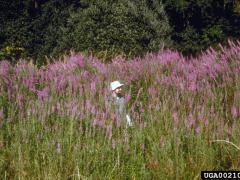
If you’ve ever spent a late August afternoon along a lake with a reedy shoreline, you may have noticed the brilliant, beautiful purple flowers of this month’s focal plant: purple loosestrife (Lythrum salicaria).
In mid-summer, Vermont starts to see a wave of yellow flowers bloom along roads, fields, meadows, and trails. This plant is called Wild Parsnip (Pastinaca sativa) and is similar in appearance to Queen Ann’s Lace (Daucus carota). Wild Parsnip is a member of the carrot family (Apiaceae), and is currently considered taxonomically indistinct from the common garden parsnip.