Backyard
A Knotweed Update
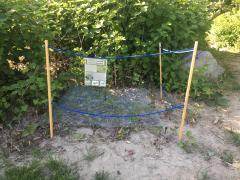
In our last issue of the VTInvasives e-newsletter, we discussed a new method of treating knotweed by using wire fencing laid horizontally on the ground over a patch of the offending species. Over the past two months, I have received several emails from readers asking some clarifying questions and looking for updates. I apologize for not being able to reply to everyone, and I hope that this article can provide an update with some answers.
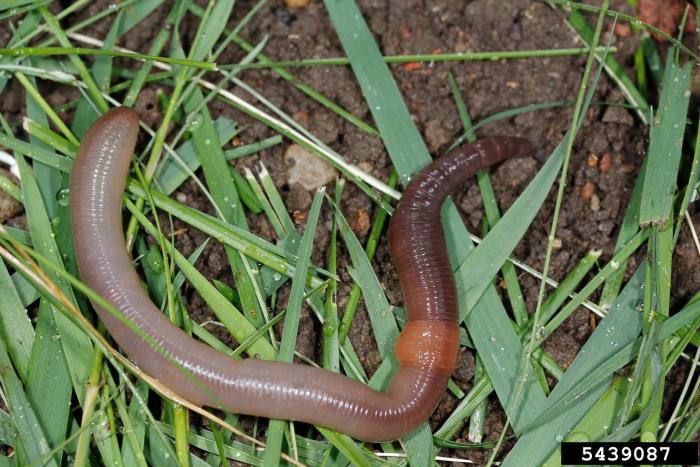
Spotlight: Common Buckthorn
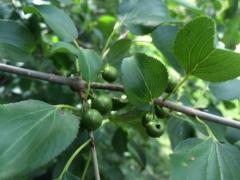
The colder temps and flurries of snow may make plant identification a thing of dreams for the coming summer. But one common invasive plant in Vermont can still be easily spotted throughout the winter months: common buckthorn.
Invasive Plant Presentation
- Workshop
Free information on mechanical (non-chemical) management of many of the noxious plants overtaking our woods, fields, riverbanks, and backyards.
Woods, Wildlife and Warblers Invasive Plant Pull-up Day!
- Field Trip
- Volunteer Opportunity
- Volunteer Training
- Workshop
HELP VERMONT’S WILDLIFE THRIVE
YOU’RE INVITED TO THE WOODS, WILDLIFE AND WARBLERS INVASIVE PLANT PULL-UP DAY
Weathersfield, 9am-12noon
YOU’RE INVITED TO THE WOODS, WILDLIFE AND WARBLERS INVASIVE PLANT PULL-UP DAY
Weathersfield, 9am-12noon
Volunteer Spotlight, 2019
It is hard to believe that the Forest Hero! Network is fast approaching its 1st birthday! To celebrate, we'd like to share with everyone, the good work that volunteers are completing in their communities. If you are working on a project and would like to help inspire others who may be seeking ideas, please write in and we'll share in future newsletters!
To learn more about the Network, and if you’d like to learn about other training opportunities, stay tuned to this website: https://vtinvasives.org/forest-hero-network
Spotlight: Amur Maple
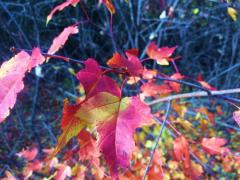
Amur Maple, Acer ginnala, belongs to the Sapindaceae family, which now includes previous members of Aceraceae (maple family). It is native to northern China and Japan, and was introduced into North America in 1860. Beginning in the 1950s, Amur Maple was reported as “locally established”.
Emerald Ash Borer Update
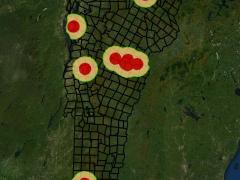
There has been a new detection of Emerald Ash Borer (EAB) in Derby Line, Vermont. This is the first confirmed detection in Orleans County.
Creating Young Forest while Managing for Invasive Species
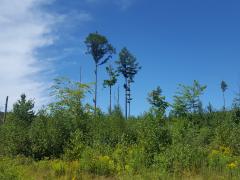
Young Forest, the forest type that is dominated by dense shrubs and trees less than 20 years old, is an extremely important cover type for wildlife in Vermont. More than 60 wildlife species – including mammals, birds, reptiles, and insects – need young forest to survive.