New Executive Order on the Movement of Ash Wood Infested with EAB

Administrative Order Clarifies the Movement of Ash Logs and Firewood to Minimize the Spread of EAB
Administrative Order Clarifies the Movement of Ash Logs and Firewood to Minimize the Spread of EAB
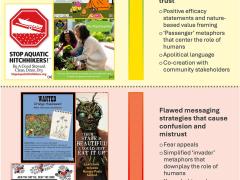
You may have heard folks around Vermont using the term "introduced" species interchangeably with the conventional terminology of "invasive" species. This may be due to a conversation happening at many levels about the language and framing of ideas used in the field of invasion ecology. Because language has the power to shape public attitudes and behaviors, the Plant Health Team at Vermont's Agency of Agriculture is adopting more accurate, neutral, and respectful language to better reflect the complexities of species introductions and avoid reinforcing harmful stereotypes.
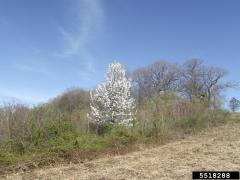
Invasive Callery pear (Pyrus calleryana and all its cultivated varieties) has been in the news this year; states across the region have been listing this species as a noxious weed – a distinction that carries with it limitations and regulations on the sale and movement of these plants.
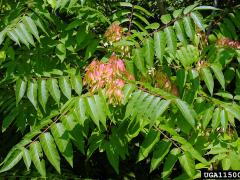
In mid-August, a concerned community member brought to the attention of scientists, the presence of an invasive insect. The insect, spotted lanternfly, had never been reported before in Vermont, and was first detected in the United States in 2014 in Pennsylvania, but has spread across the eastern US to 8 states.
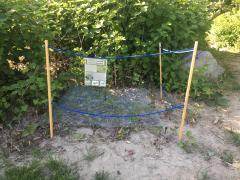
In our last issue of the VTInvasives e-newsletter, we discussed a new method of treating knotweed by using wire fencing laid horizontally on the ground over a patch of the offending species. Over the past two months, I have received several emails from readers asking some clarifying questions and looking for updates. I apologize for not being able to reply to everyone, and I hope that this article can provide an update with some answers.
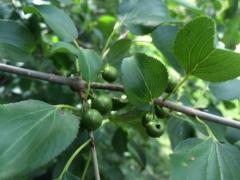
The colder temps and flurries of snow may make plant identification a thing of dreams for the coming summer. But one common invasive plant in Vermont can still be easily spotted throughout the winter months: common buckthorn.