WOMEN OWNING WOODLANDS!: BBQ & Book Club
- Festival
Women Owning Woodlands is excited to invite you to a BBQ and Book Club event this summer!
Springfield, Vt. — An invasive pest with a nasty habit of killing trees has established a toehold in the Upper Valley, and could bring devastation to the area’s forests in coming years, wildlife officials say.

Infection is hard to detect at first. It takes up to three years for the serious symptoms to show, but when they do, it doesn’t take long.
Ash trees became common in Vermont after Dutch elm disease decimated elm populations across the state, starting in the 1960s or so.
Now, ash trees are at risk.
The problem is the emerald ash borer, an insect native to eastern Asia...
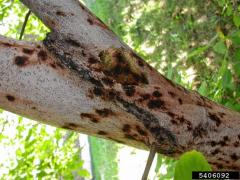
Syracuse, N.Y. -- A tree disease capable of wiping out black walnuts across the Eastern U.S. is heading for New York.
Thousand cankers disease has arrived in Ohio and Pennsylvania. It has not yet been found in New York state, but it could be on its way, or even here already.
"It could come into New York at any time," said Karen Snover-Clift, director of the plant...
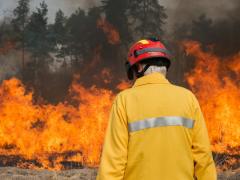
Forest scientists have found an unexpected 'silver lining' to the insect outbreaks that have ravaged millions of trees across western North America.
While insect outbreaks leave trees looking like matchsticks, a new University of Vermont-led study finds these hungry critters significantly reduce wildfire severity.
The findings contrast sharply with popular attitudes --...
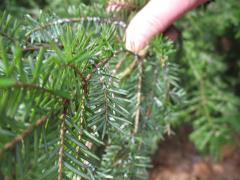
As the 2015-2016 hemlock woolly adelgid survey season got under way there was some concern for the condition of hemlock trees in southern Vermont. The preceding growing season included a period of sinificant drought. Trees on ledgy sites were showing signs of stress. Elongate hemlock scale had been found in the area, sometimes coexisting with HWA. As the winter wore on, temperatures were mild...
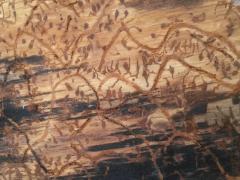
This winter has been the warmest on record in much of New England. And while many people enjoyed the T-shirt weather, it made Claire E. Rutledge, a researcher with Connecticut’s Agricultural Experiment Station, more concerned about what next season may hold.
Beginning in April, she will head to Wharton Brook and other state lands, setting traps for the southern pine beetle and checking...

Two years ago, in May 2014, the N.H. Division of Forests and Lands released parasitic wasps at three sites in Concord and Canterbury in an attempt to control emerald ash borer (EAB) populations with natural predators (read more about the project here). Bill Davidson and Kyle...
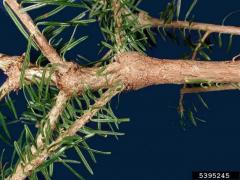
The balsam woolly adelgid is an invasive insect that attacks true firs (Abies, spp) in eastern and western forests. In Vermont, the native balsam fir and a commonly used Christmas tree, Fraser fir, are susceptible. This insect originated in Europe; probably first arriving in the northeast around 1900. It has been reported in Vermont for many years. In 2015, scattered...