Forest Pests

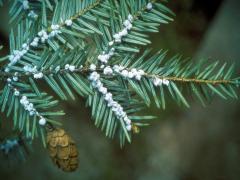
The Latest on Hemlock Woolly Adelgid in Vermont
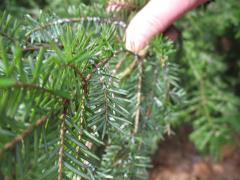
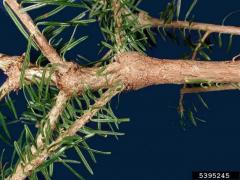
As the 2015-2016 hemlock woolly adelgid survey season got under way there was some concern for the condition of hemlock trees in southern Vermont. The preceding growing season included a period of sinificant drought. Trees on ledgy sites were showing signs of stress. Elongate hemlock scale had been found in the area, sometimes coexisting with HWA. As the winter wore on, temperatures were mild...
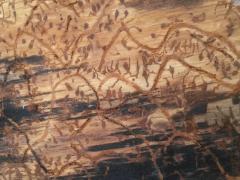
Warmer Winter Brings Forest-Threatening Beetles North

This winter has been the warmest on record in much of New England. And while many people enjoyed the T-shirt weather, it made Claire E. Rutledge, a researcher with Connecticut’s Agricultural Experiment Station, more concerned about what next season may hold.

Beginning in April, she will head to Wharton Brook and other state lands, setting traps for the southern pine beetle and checking...

A Foe of our Firs: a spotlight on balsam woolly adelgid

The balsam woolly adelgid is an invasive insect that attacks true firs (Abies, spp) in eastern and western forests.  In Vermont, the native balsam fir and a commonly used Christmas tree, Fraser fir, are susceptible. This insect originated in Europe; probably first arriving in the northeast around 1900. It has been reported in Vermont for many years.  In 2015, scattered...

Two new invasive species could invade the north country landscape, officials trying to protect sugar maples

CANTON — Residents, foresters and landscapers are being asked to be on the lookout for two new species that may invade the north country’s landscape, including a large worm that thrashes around like a snake.

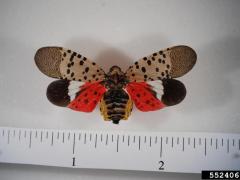
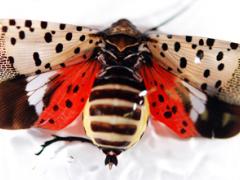
The Asian spotted lanternfly and the giant Asian jumping worm are emerging invasive species that are being monitored by officials from Cornell Cooperative Extension of...

Learn To Battle Invasive Plants At Free Sterling College Workshop

By DIANE BRONCACCIO

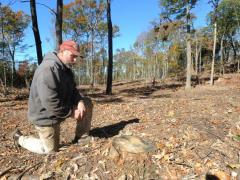
SHELBURNE CENTER, Massachusetts — It was only a year ago that Norman and Lisa Davenport first noticed sunlight flickering through the once-dense shade of a stand of hemlocks on their hilltop farmland.

And now those first trees look more like utility poles than conifers.

As the twin evils of elongate hemlock scale and hemlock woolly adelgid spread...

Hemlock Woolly Adelgid Update

The winter of 2014-2015 was tough on hemlock woolly adelgid; 97 to 99 percent of the sistens, or winter, generation died.  The previous winter had similar winter mortality rates.  This helped to give hemlock trees a bit of a reprieve.  But, while these recent mortality rates have been high enough to temporarily stop the spread of HWA, the trees are still...