Laurel Wilt
Raffaelea lauricola (syn. Harringtonia lauricola)



Identification
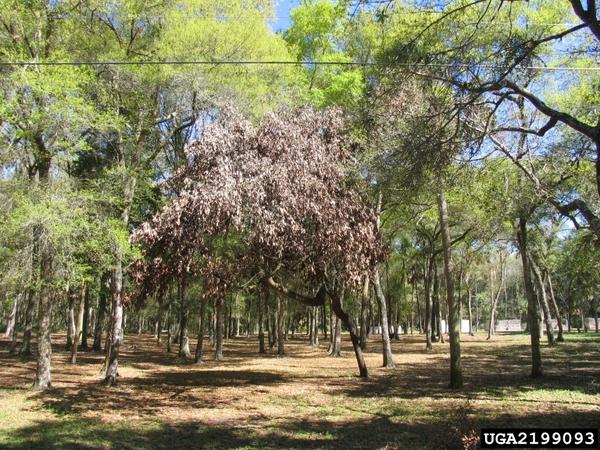
Laurel wilt is caused by the introduced fungal pathogen Raffaelea lauricola (syn. Harringtonia lauricola) that kills trees and shrubs in the laurel family. Laurel wilt is spread by the introduced redbay ambrosia beetle Xyleborus glabratus, which transmits the fungus when it tunnels into the stems and branches of host plants, leaving behind the fungal spores. Once the fungus is introduced inside a tree, it spreads quickly, blocking water flow and causing tree death. Infested trees will show a full crown of dead, brown leaves within weeks or months.
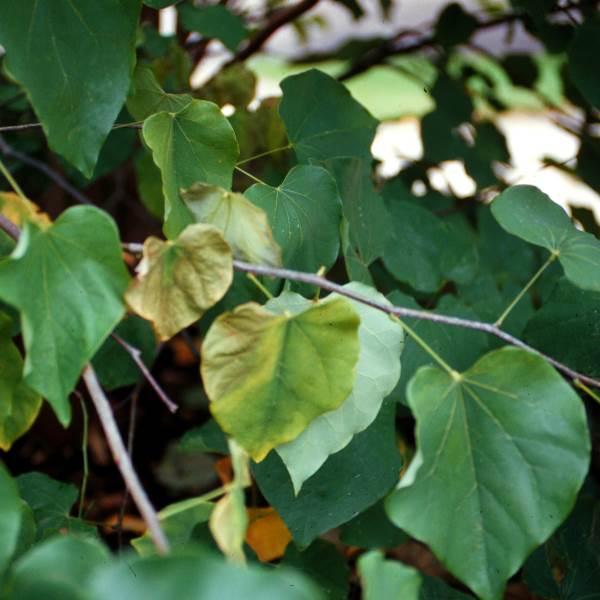
In Vermont, native species at risk are sassafras and spicebush, although some ornamental species such as redbud may also be impacted. Despite its name, mountain laurel is not in this family and is not impacted by the disease.
In August 2025, the presence of laurel wilt disease was confirmed for the first time on Long Island in New York State. Prior to New York's detection, Kentucky and Virginia were the northernmost known cases of laurel wilt disease. Laurel wilt has not been detected in Vermont.
SIGNS AND SYMPTOMS
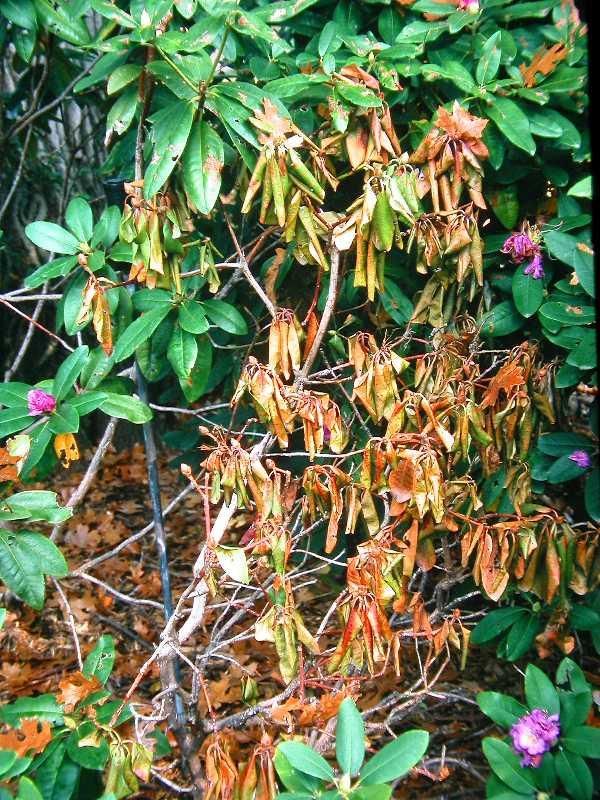
- Leaves that suddenly wilt and turn brown.
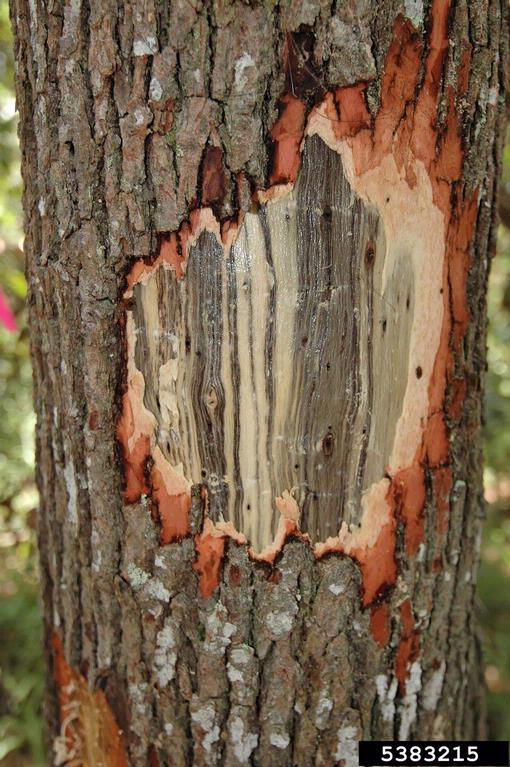
- Dark streaking of the sapwood beneath the bark.
- Small entry holes on the branches, trunk, or roots, which are sometimes surrounded by fine sawdust-like “toothpicks” pushed out from the bark that are created by the redbay ambrosia beetle.
- Symptoms of laurel wilt are similar to drought stress symptoms; leaves wilt, change color, and fall off prematurely.
- Typically, the discoloration runs with the grain and starts as streaks before expanding within the tissues. To confirm disease, streaked area of sapwood can be removed and submitted to a diagnostic lab.
Biology
Laurel wilt is a fungal tree disease caused by Raffaelea lauricola (syn. Harringtonia lauricola), an introduced fungal pathogen transmitted to the tree by the introduced ambrosia beetle Xyleborus glabratus. A single inoculation can cause disease, causing host decline and thus making it more attractive for further infestation.
Origin
This beetle and fungus are native to southern Asia. Laurel wilt was first found in Georgia in 2002 and has spread through much of the Southeast United States. Until recently, the farthest north it had been confirmed was in Virginia and Kentucky. In August 2025, the disease was confirmed for the first time in New York State on Long Island, marking the northernmost occurrence in the United States.
Habitat
In Vermont, laurel wilt may impact two native plant species: sassafras (Sassafras albidum), a small, relatively uncommon tree that may be found scattered in dry hemlock-oak and dry oak forests of the Champlain and Connecticut River Valleys, and spicebush (Lindera benzoin), an understory shrub that is found primarily in moist woodlands, swamp margins, and along streambanks in the southern part of the state. Spicebush is ecologically important as a host plant for the spicebush swallowtail butterfly and promethea moth.
Life Cycle
Most ambrosia beetles attack dead or dying trees, but the redbay ambrosia beetle attacks healthy ones. Its first attack usually fails, but it introduces a fungus into the tree. The fungus spreads through the tree’s water-conducting tissues. The tree tries to stop it by blocking these tissues, but this also blocks water flow and kills the tree.
As the tree weakens, more beetles attack. They form tunnels in the wood, feed on the fungus, and lay eggs. Only one female is needed to start an infestation because unmated females can produce males, then mate with them to produce more females. Many females leave trees already mated, allowing rapid spread to new trees.
The fungus mainly spreads by the redbay ambrosia beetle, but it can also move between nearby trees through connected roots. It can even be carried by other ambrosia beetle species, meaning more than one beetle can spread the disease that causes laurel wilt.
Vermont Distribution
Laurel wilt has not been detected in Vermont.
How You Can Help
Report suspected observations of laurel wilt using this website's "Report It!" function.
Citations
PHOTO CREDIT
538215, Ronald F. Billings, Texas A & M Forest Service, Bugwood.org
UGA2199093 & UGA2199082, Albert (Bud) Mayfield, USDA Forest Service, Bugwood.org
Abby Marino, Long Island Invasive Species Management Area
Alexandra Blevins
University of Wisconsin-Madison, Wisconsin Horticulture, Division of Extension
Missouri Botanical Garden
Wisconsin Department of Natural Resources
INFORMATION CREDIT
New York State Department of Environmental Conservation
North Carolina State University Extension
Southern Regional Extension Forestry, Forest Health Program
Native Plant Trust
Vermont Department of Fish and Wildlife