Emerald Ash Borer
Agrilus planipennis



Identification
Identification
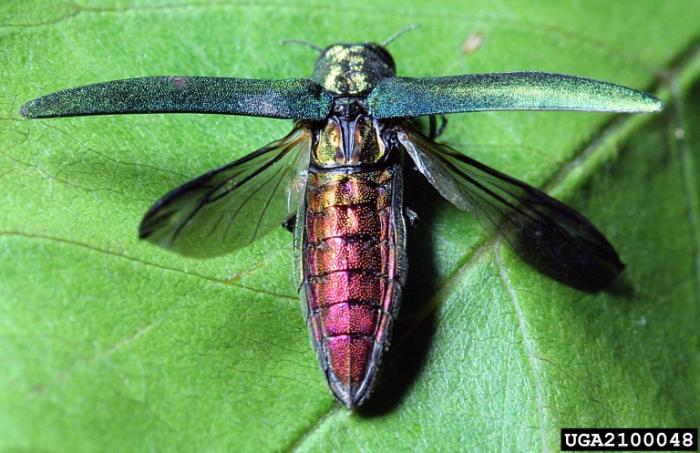
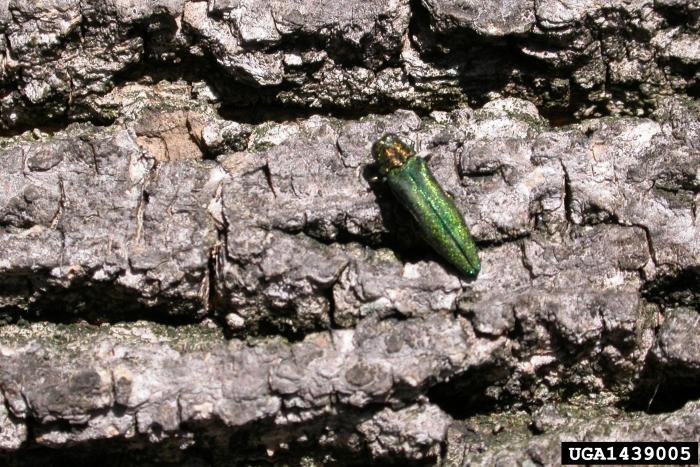
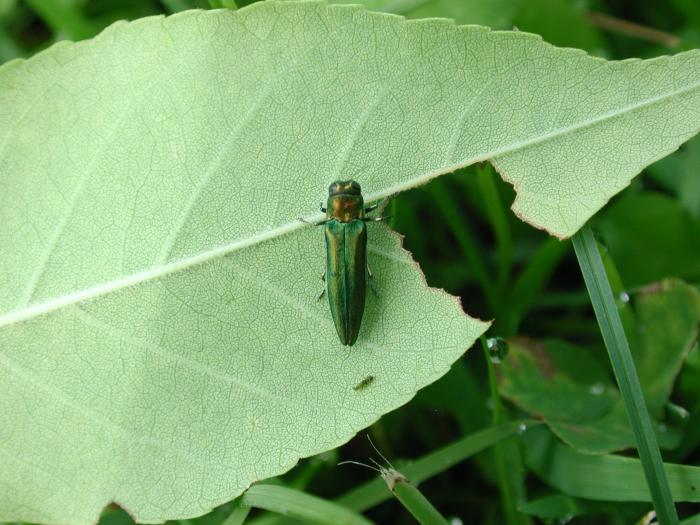
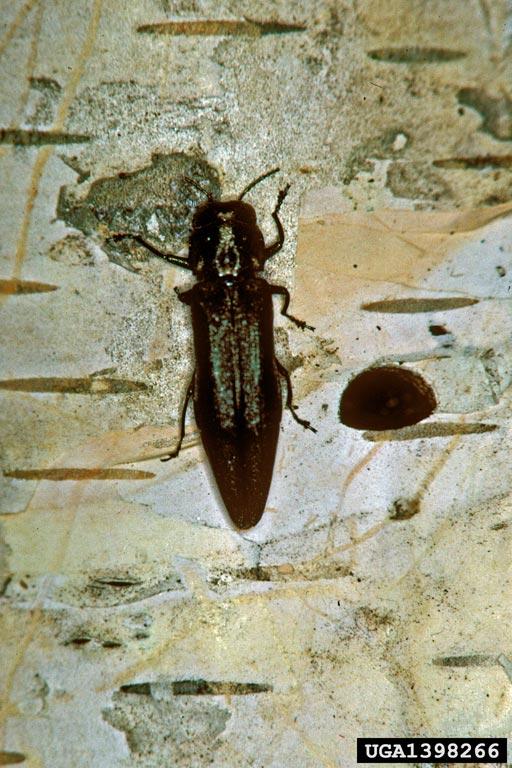
- Adult emerald ash borers are 1/4 to 1/2 inches long, narrow and bullet shaped with a flat back.
- Adults are metallic in color with purple/red metallic abdominal segments beneath their wing covers.
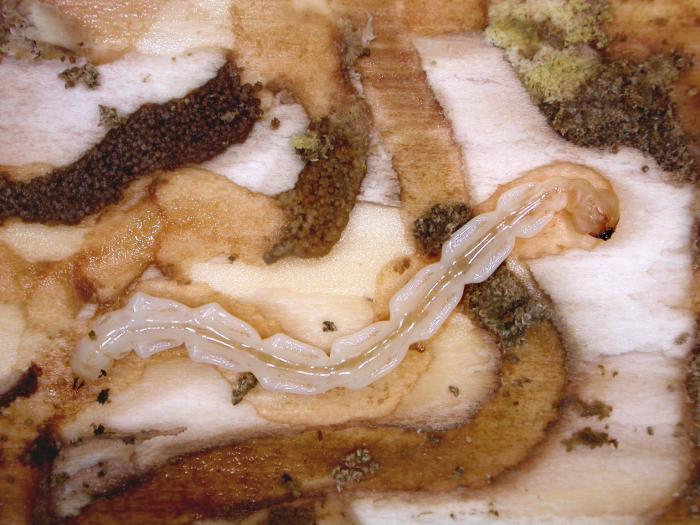
- Larvae can get up to 3 cm in length and are a creamy white color with no legs.
- Larvae body is made up of flattened, bell-shaped segments.
- Attacks all species of ash trees.
signs and symptoms
- Adult beetles emerge in late May/early June
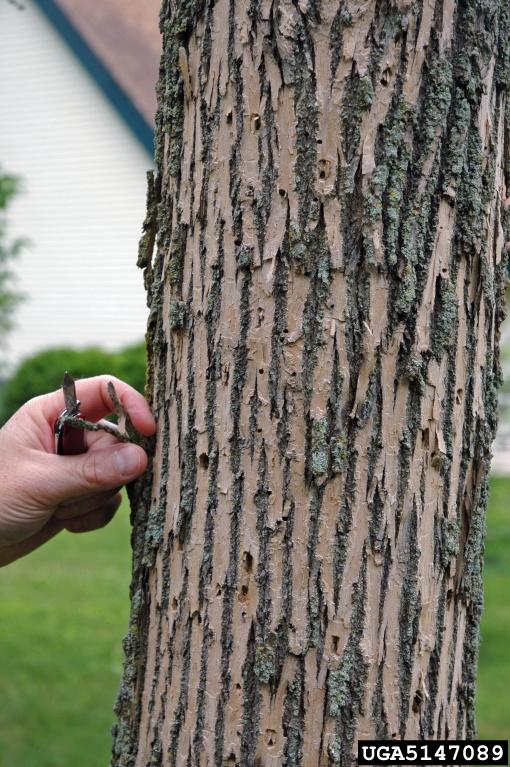
- Bark splitting
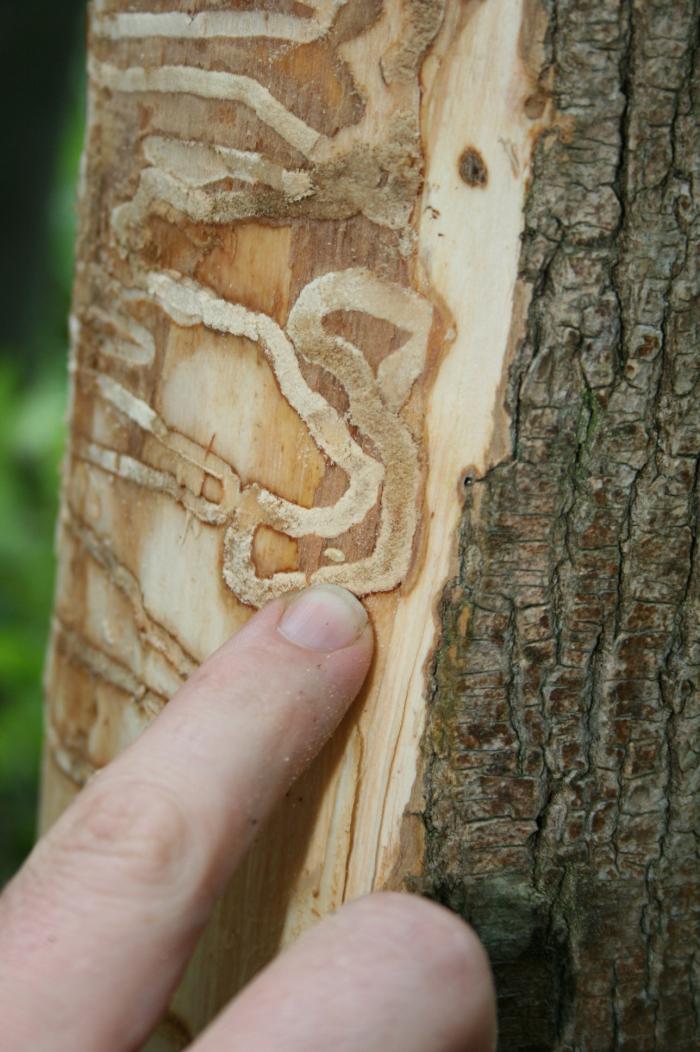
- S-shaped tunnels behind outer bark
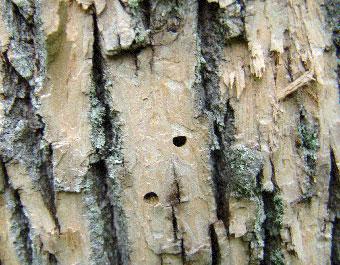
- D-shaped exit holes 1/8" wide on bark surface
- Woodpecker flecking
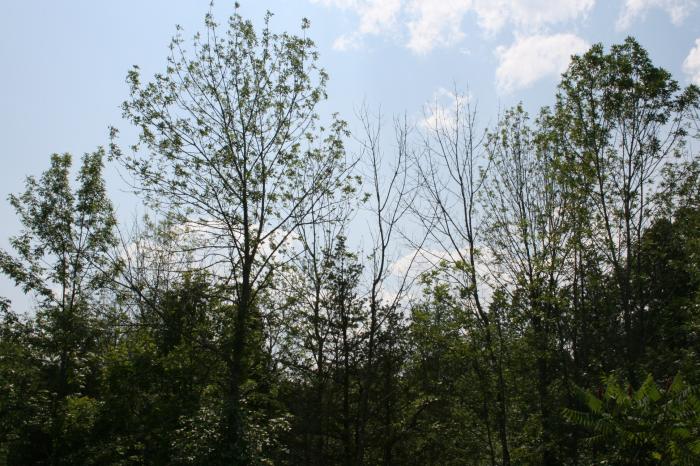
- Dead top branches of ash trees
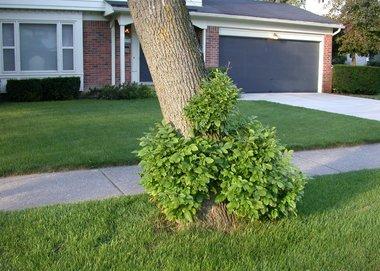
- Leafy offshoots from the lower trunk of ash trees
- See image slideshow above for signs and symptoms
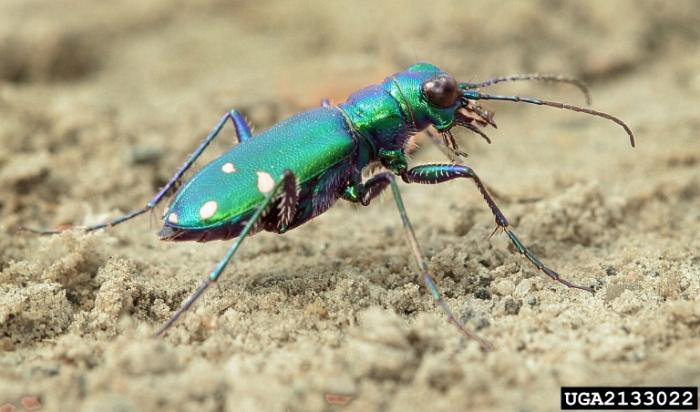
Native Look-alikes
Emerald ash borer can be confused with many native insects. Check out these native look-alikes.
how to identify an ash tree
In Vermont, we have three species of ash trees: green ash (Fraxinus pennsylvanica), black ash (Fraxinus nigra), and white ash (Fraxinus americana). Here are some helpful links for ash tree identification: 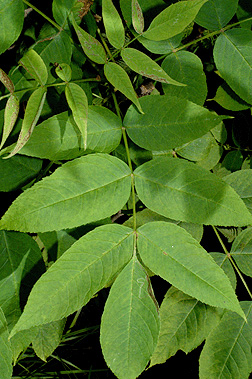
- Ash Tree Identification, Michigan State University
- White Ash Tree Identification
- Green Ash Tree Identification
- Black Ash Tree Identification
Biology
origin
Emerald ash borer (EAB), Agrilus planipennis, is an exotic beetle that was discovered in southeastern Michigan near Detroit in the summer of 2002. The larvae feed in the cambium between the bark and wood, producing S-shaped galleries that girdle and kill branches and trees. Emerald ash borer probably arrived in the United States on solid wood packing material carried in cargo ships or airplanes originating in its native Asia. Learn more on the USDA APHIS story map.
habitat
Emerald ash borer feeds and lives in all species of ash and, in some cases, it has been found on white fringetree (Chionanthus virginicus).
life cycle
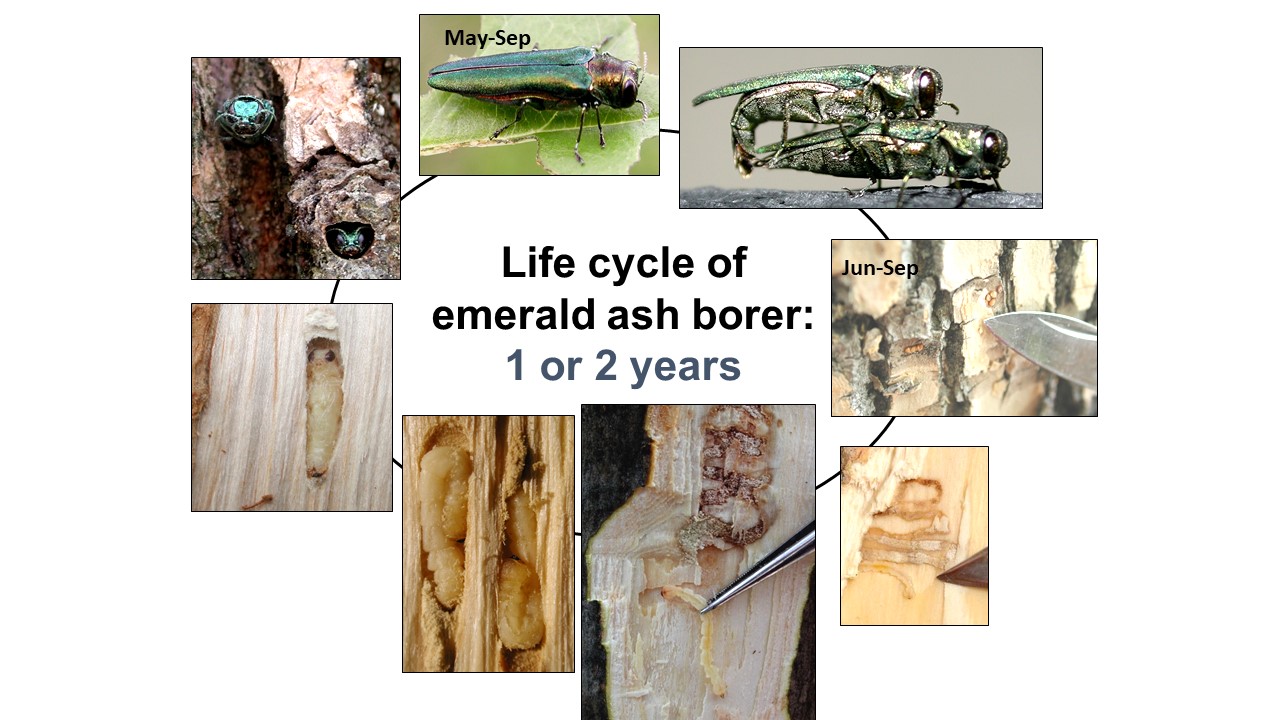
The Life Cycle of the Emerald Ash Borer, USDA Forest Service.
The EAB generally has a one-year life cycle and goes through complete metamorphosis.
Adults lay eggs on the bark of the trunk or branches in the summer.
Eggs hatch in 7-10 days.
Larvae do their damage to the tree by tunneling in the inner bark and outer wood. This kills the tree by interrupting the flow of food and water. Galleries widen as larvae mature.
Pre-pupae larvae overwinter in shallow chambers in the outer sapwood or in the bark of thick-barked trees.
Pupation begins in late April or May. Adult emergence begins in early June.
Adults chew D-shaped exit holes are 3-4 mm wide.
Adult EAB feed along the margins of leaves, leaving small, irregular shaped edges.
Ecological threat
5% of Vermont's trees are ash. The majority of ash trees infested with emerald ash borer will die. The emerald ash borer poses a threat to Vermont's economy and ecology. It spreads very quickly, is difficult to detect, and eradication is not expected.
Vermont Distribution
A map of the Emerald ash borer infested area in Vermont can be found here.
Citations
Photo Credit
Taylor Scarr, Ontario Ministry of Natural Resources, Bugwood.org
Art Wagner, USDA - APHIS, Bugwood.org
David Cappaert, Michigan State University, Bugwood.org
Pennsylvania Department of Conservation and Natural Resources - Forestry Archive, Bugwood.org
USDA Forest Service - Northeastern Area, USDA Forest Service. Bugwood.org
Pennsylvania Department of Conservation and Natural Resources- Forestry, Bugwood.org
information credit
National EAB Information Website
New York Invasive Species Information